
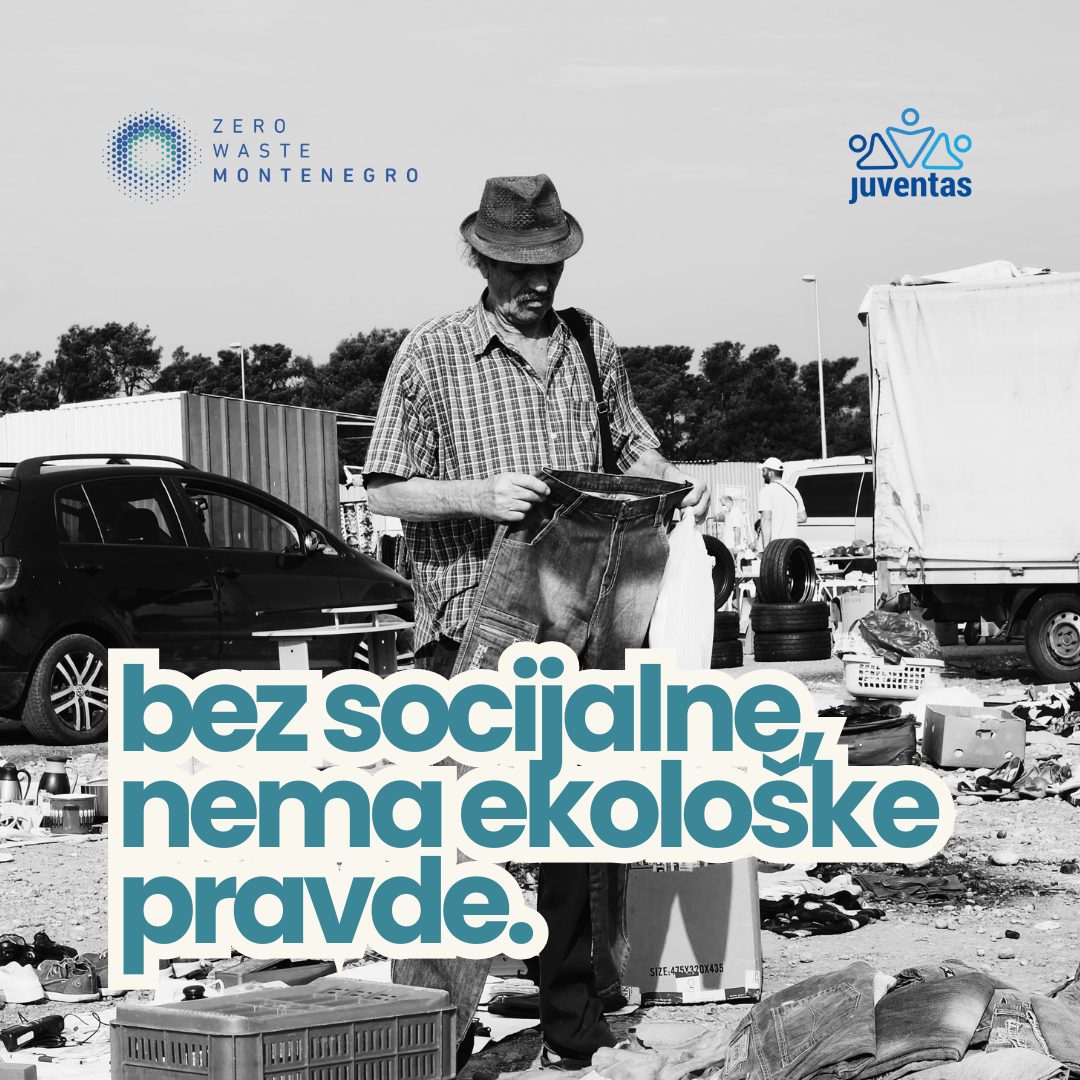
Zero Waste Montenegro and Juventas are launching a pioneering research project that will, for the first time in Montenegro, analyse the link between social justice, environmental sustainability, and the circular economy through the functioning of a second-hand market (flea market) in Podgorica. The project is supported by Zero Waste Europe within the framework of the programme “The Long Game: Building a resilient & connected movement for lasting impact”.
Although second-hand markets are often perceived as marginal or informal spaces of trade, they represent one of the oldest and most effective systems of product reuse. By extending the lifespan of goods, they reduce the amount of waste, contribute to resource conservation, and enable access to products at lower prices, while at the same time representing an important source of income for many citizens.
The project will explore the social structure of vendors, their working conditions, economic position, challenges they face, and the contribution they make to waste prevention and the development of the circular economy. Special attention will be given to the position of vulnerable and marginalised groups, who often remain invisible in public policies and waste management systems.
Although Montenegro has initiatives in the fields of waste management, circular economy, social inclusion, and support for informal waste pickers, according to available public information, no research has so far been conducted that connects these topics through second-hand markets as concrete spaces of socio-environmental justice.
Through this project, Zero Waste Montenegro and Juventas are opening a new chapter in understanding the circular economy in Montenegro — not only as a matter of waste and resources, but also as a matter of decent work, equality, health, access to goods, and the rights of people who contribute every day to reuse and resource preservation.
The aim of the research is not only to collect data, but also to initiate a broader social discussion on how the transition towards a more sustainable society can be fair for everyone. The research findings will serve as a basis for developing recommendations for decision-makers, improving circular economy policies, and strengthening inclusive waste management systems.
Because there can be no environmental justice without social justice.
Photo credits: Milovan Pavicevic