
Millions of women use menstrual products every month. This is not a matter of choice, but a basic necessity. Yet how many of us really know what is in the pads, tampons and period underwear we use? And why are we expected to research for ourselves whether products that come into direct contact with our bodies are safe?
While menstrual health is still not discussed enough, the issue of potentially harmful chemicals in menstrual products remains almost invisible in public discourse. And it shouldn’t be.
On the occasion of Environmenstrual Week, an international week dedicated to menstrual health and environmental protection and organised by the Women’s Environmental Network (WEN), Zero Waste Montenegro joined civil society organisations, health experts and environmental activists in signing a joint letter calling for stronger action to restrict PFAS chemicals in the European Union.
The organisations signing the joint letter call on decision-makers to:
-
Support comprehensive restrictions on PFAS chemicals, without unjustified exemptions that would allow their continued use in consumer products.
-
Ensure greater availability of safe and reusable menstrual products, which should not be a privilege available only to a few.
-
Require greater transparency about the composition of menstrual products, so that everyone has the right to know what they are buying and using.
These are not excessive demands. They should be basic standards.
The European Union is considering comprehensive restrictions on PFAS chemicals, creating an important opportunity to reduce their presence in the products we use every day, as well as in the environment. As an EU candidate country, Montenegro should not wait for formal accession to begin applying high standards for the protection of human health and the environment. This is an opportunity to follow European initiatives, improve existing regulations and ensure that the safety of products available on the Montenegrin market does not fall behind European standards.
Single-use products generate large amounts of waste, while certain chemicals used in their production can remain in the environment far longer than the products themselves are used. But replacing a single-use product with a reusable one is not enough if we do not know whether the new product is actually safe.
What is actually in the products we use?
PFAS, often referred to as “forever chemicals”, are a group of synthetic compounds that are extremely difficult to break down and can persist in the environment for long periods of time. Certain PFAS substances have been associated with serious health risks, including disruption of the hormonal and reproductive systems, as well as adverse effects on the immune system.
Testing carried out in Europe has indicated the presence of PFAS in some single-use and reusable menstrual products, including pads, tampons and period underwear. While restrictions on certain PFAS substances are already being introduced across different product categories, their presence in menstrual products requires greater attention.
Not every product in which PFAS chemicals have been detected is automatically dangerous, nor are all potential health risks equally well established. But uncertainty should not be an excuse for inaction, particularly when we are talking about products used regularly over several decades of a person’s life.
When we buy menstrual products, we assume they are safe — or at least, we should have the right to assume that they are. Instead, consumers are expected to read the fine print, search the internet, analyse ingredients and spend more on products marketed as “natural”, “clean” or “toxin-free”.
But what about those who do not have the time, money or access to such information?
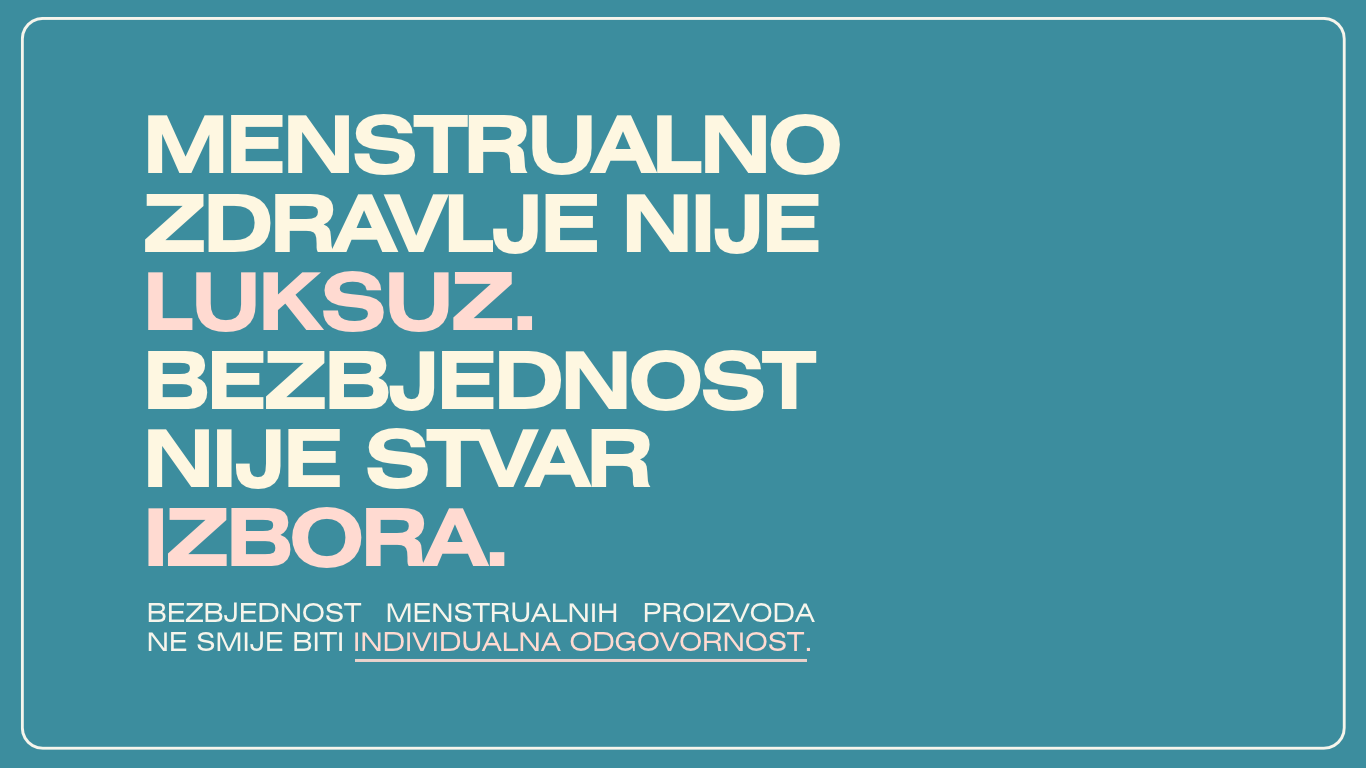
We are not asking for privileges. We are asking for accountability.
Menstrual health should not be treated as a secondary issue. It is not a matter of personal preference or another consumer trend. It is a matter of public health, equality and the fundamental right to information.
Menstruation is not a taboo. Menstrual health is not a luxury. The right to safe products should not be negotiable. It is time to stop asking women how much they know about the products they use and start asking manufacturers and institutions what they are doing to make those products safe.